Gaming as a Hobby vs. Gaming Addiction
For most people, playing video games is a fun and harmless hobby. Gaming becomes a concern only when it consistently interferes with functioning and well-being over time.
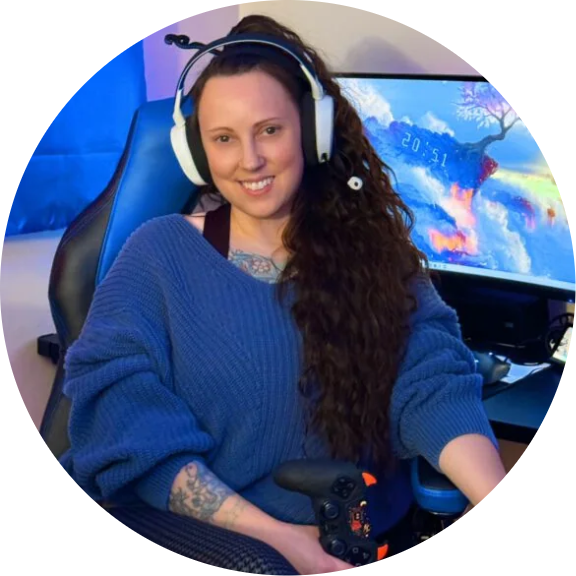 By Angela Phillips, Licensed Professional Counselor
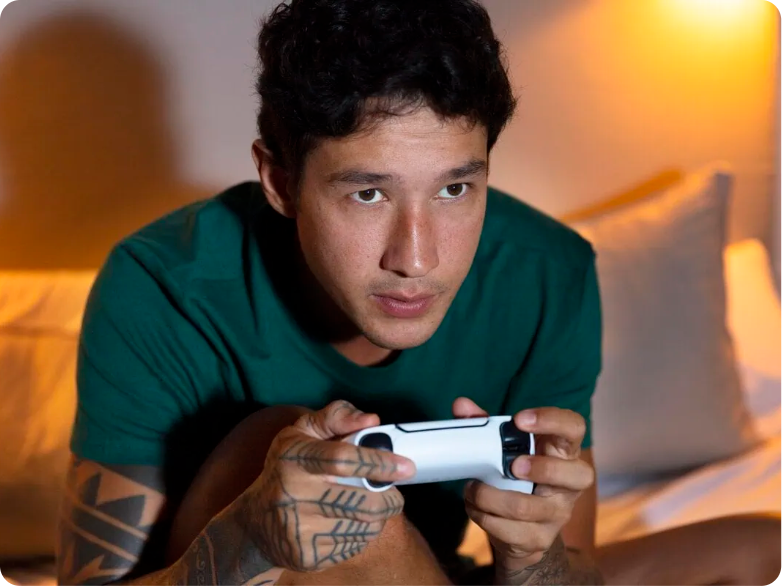
Most of my clients who game are not addicted
I’m Angela Phillips, a Licensed Professional Counselor at Theralynx. Parents in Roanoke and Lynchburg often ask me to “fix the gaming” as if hours on a screen were the diagnosis. For most people, play is a hobby: a way to relax, to keep up with friends, to live inside a story. When someone can still sleep, go to school or work, eat, and maintain at least some relationships, I do not start with a disorder label.
I also do not shrug off harm. There is a smaller group for whom gaming has become hard to control and more important than the rest of life. Health systems, including the World Health Organization in ICD-11, describe gaming disorder when that pattern is serious and lasting—typically about 12 months—not after a long weekend of a new release.
Hobby looks like a life that still works
A hobby can be intense. People skip a party for a raid. They talk about a game more than some relatives would like. Intensity is not the test. Functioning is. I ask whether grades or work are slipping in a sustained way, whether sleep has collapsed, whether the person can stop when they intend to, and whether they still care about anything that is not the game.
In therapeutic gaming I use games on purpose, as the session. That is not the same as unsupervised play at 2 a.m. Using a game with a clinician does not mean the client has an addiction, any more than using art in therapy means they have an art disorder.
When I start to worry
I get more concerned when several of these stack up over months, not days:
- They cannot cut back even when they say they want to
- They become irritable or anxious when they cannot play
- Gaming consistently outranks school, work, hygiene, or relationships
- They keep going despite failing classes, fights at home, or lost jobs
- Other interests drop out
- They use play mainly to escape feelings they will not otherwise touch
- They lie about how much they play
- Sleep, meals, and daily routines are regularly sacrificed
ICD-11-style gaming disorder is about loss of control, increasing priority of gaming, and continuation despite problems, over a long period. A high hour count with a job, friends, and a bedtime is not that. A modest hour count with no other life might be.
A college student I saw could play 20 hours a week, keep a GPA, and show up for work. Another played less than that and still missed every morning class because they could not stop a session once it started. The second person needed counseling. The first needed a parent to stop calling it addiction.
What to do instead of confiscating the console
If you are a parent, ripping the device out of the house can turn you into the boss fight and tell you nothing about sleep, depression, or social panic. I would rather we look at anxiety, depression, isolation, and whether the game is the only place your kid feels competent. Sometimes the work is individual counseling that never touches a controller. Sometimes it is therapy through online gaming so we can see the pattern in the habitat where it lives.
If you are the person who games, you do not have to hit a 12-month criteria list before you ask for help. If you have lost control and it is costing you a life you want, that is enough. Theralynx is based at 123 West Lee Avenue in Vinton. I see people by telehealth in Virginia and Counseling Compact states. No referral is required. We accept Sentara, Aetna, and Optum; fees are explained before you book.
This is not emergency care. If you or someone else is in immediate danger, call 911 or 988.
If you want a clinical look at whether play is still a hobby, book with me or request an appointment. Bring what a typical week actually looks like—not the version you would put on a report card.
Therapy through gaming is a different question
People hear “we use games in counseling” and assume we are encouraging more play. Therapeutic gaming is a structured hour with me, on a HIPAA-compliant platform, with a goal. If someone’s play already looks like a disorder pattern, I may not use a game as the medium at all. We might do individual counseling that never logs in. The tool follows the clinical picture, not the other way around.
If you want language to take to a partner or a parent, try this: “Hours are not the diagnosis. Control and consequences over months are.” Then get a clinician to look at the week, not the weekend.
Sleep is the tell I trust more than a parent’s hour estimate. If someone is routinely up until 4 a.m. and then failing the next day, we treat the pattern—mood, anxiety, impulse control, the game—not a morality play about screens. That is counseling. It is not a lecture about “kids these days.”